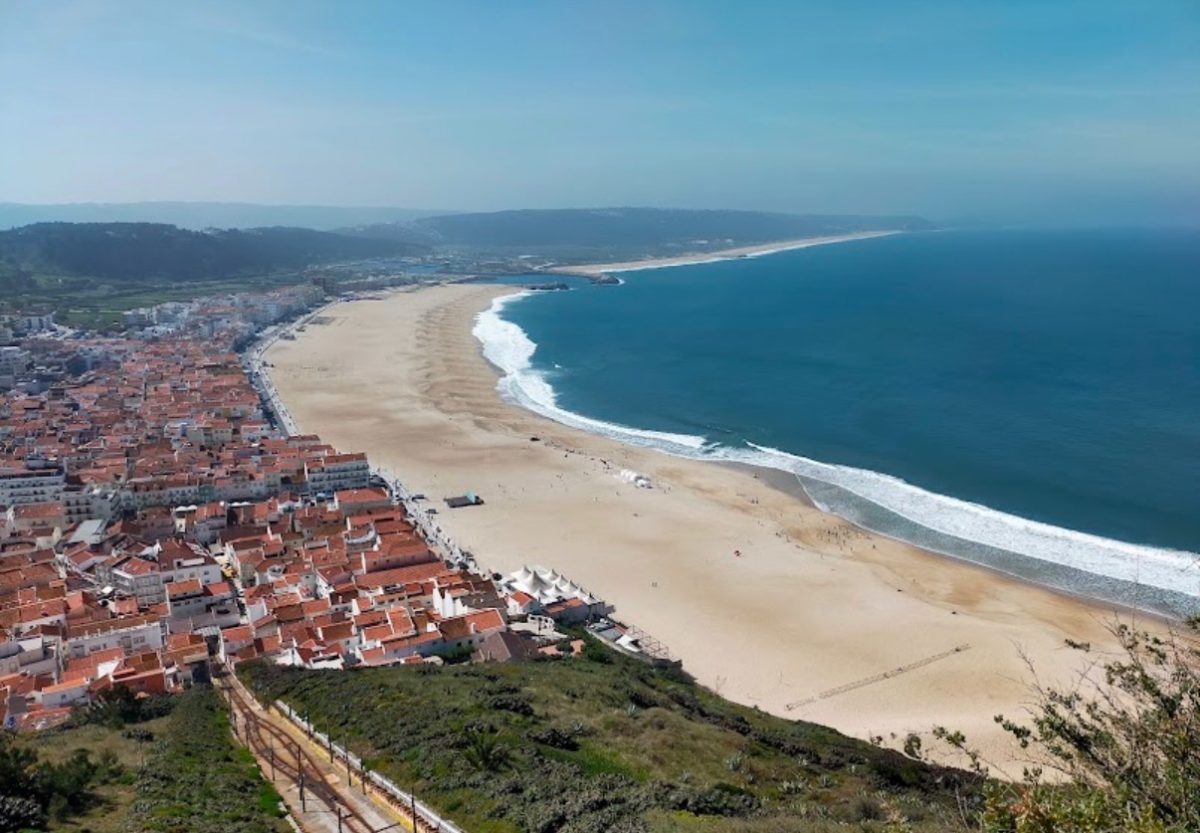
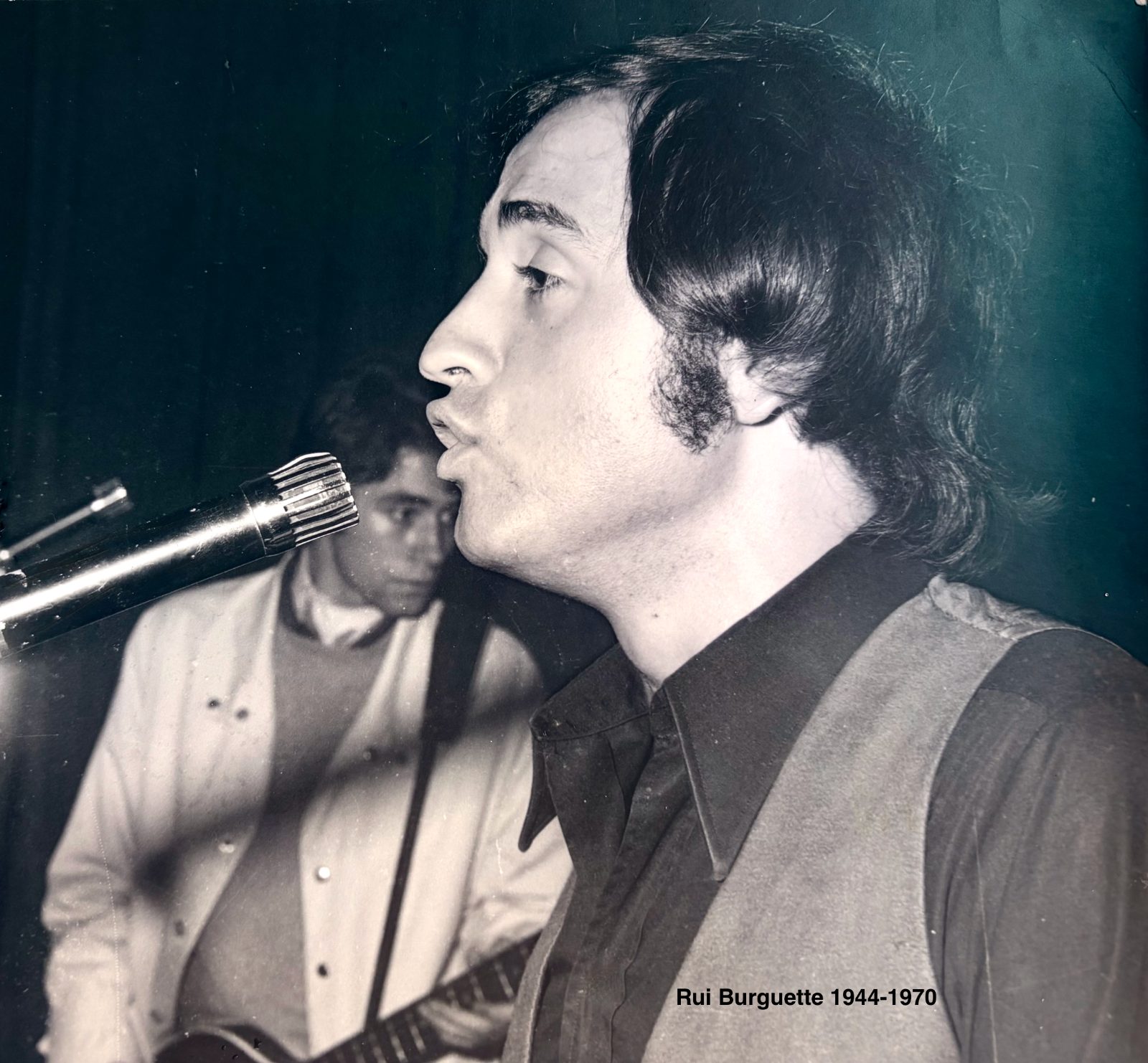
Nazaré, Summer 1970
Leaning against the rock ledge, I shifted into a more comfortable position, enjoying the warmth of the stone radiating through my jeans and back. It was surprisingly chilly in Nazaré after the sun set. The ocean breeze held a familiar taste and smell of salt. The moonlight reflected off the waves, onto the cliff and the beach below me. It was comforting. Just what I needed, now that my mom and aunt had left Nazaré. It was lonely, secluded, the perfect stage for a Gordon Lightfoot tune to console me in my sadness. Even without my guitar, my voice would be comforting.
Whispering the melody of the first song, I tried to match the rhythm of the undulating waves crashing upon the cliff forty feet below me. Slowly building up the volume with each successive tune, I belted out ‘Only A Go-Go Girl In Love’ with my whole heart and soul. My voice projected out over the cliff, off the waves, and over the ocean. I stopped. Inhaled the salty air and let out a long sigh. I was feeling utterly alive again.
The applause began softly behind me, and as the volume intensified, I turned toward my audience of one.
“That,” he said, “was incredible. Who are you, singing all alone up here? Only the locals know about this secret spot. Hi, I’m Rui, and you’re?”
“I’m Joanne, from Canada, pouring out her sad heart into the ocean. Thanks for not scaring me off the cliff! Hi Rui! You speak excellent English.”
I moved over, trying to see his face in the moonlight.
“I listen to English records and talk to every tourist, begging them to correct my mistakes. Joanne, please sing me one more.”
The evening shadows concealed his features; he was just an outline, sitting close to me on the cliff. He sounded sincere and friendly. Relaxing, I asked if he knew any songs in English.
“‘The House of the Rising Sun’,” he said, “my favourite.”
I laughed and slowly began my interpretation of the Animals 1964 hit. Rui joined in on the second verse, harmonizing with me. Together we sang an amazing rendition of ‘The House’ to the universe.
“My God,” I said. “You have an incredible voice. All that’s missing is my guitar...”
“Guitar?” he cut me off mid-sentence. “Guitar? You can play the guitar?”
“Actually, I play a hell of a lot better than I sing,” I confessed.
“Let’s head back into town. I’ll find us a guitar and we can go out for a drink. If we hurry, we can catch the last cable car down the cliff,” Rui suggested.
“I’d rather walk—it’s only four kilometers and all downhill, and yes I’d love to grab a beer.”
I stood up, dusted off my jeans and extended my hand to him, like we were old friends, yanking him to his feet. He was my height and as we approached the road that would take us back into town, there was enough light from the few street lamps to confirm that my new friend, although not tall, had the most beautiful brown eyes. He had an infectious friendly, casual demeanour. I flirted with him as we approached Nazaré, a tiny fishing village midway up the west coast of Portugal.
“First, tell me how it is you are in Nazaré so early in May,” he asked. “The tourists usually don’t arrive until mid-June.”
“Well,” I responded, “my mom and my favourite aunt left this morning for the airport in Lisbon. They’re on their way back to Canada.”
“They were visiting Portugal?”
“Yes, we spent three weeks travelling through Spain and Portugal. That’s why I was singing my lonely heart out to the ocean. I’ve been travelling for almost a year, all over Europe; so seeing my mom for three weeks made me homesick for the first time since I left Canada. But I’m not ready to head home yet. There’s a big world out there that I need to explore.”
“You’re still here,” Rui said, his hand casually brushing against mine.
“Mom paid for an extra week at our pension so I could continue to enjoy this beautiful town,” my hand tingling from his touch. “Usually I stay in hostels so this is a real treat, cozy bed, a bathroom and a yummy breakfast for another week.”
As we approached the main road into town, Rui grabbed my hand.
“I have a better idea for that beer,” his gorgeous eyes sparkling. “Let’s hitch a ride to the best bar in Portugal. I want to be your tour guide. Digo Eu is only thirty minutes from here and I promise you will love it.”
The first car that approached stopped. Rui knew the driver by name.
“Juan is happy to take us up the mountain, if I buy him a beer.”
We climbed in and as we wove up the small road, I smiled to myself realizing the homesickness I’d felt all day was gone. I had the feeling that the week ahead would be unforgettable. The parking lot was practically empty.
“It’s often not crowded during the week, this time of year.” Rui added, “From Thursday to Sunday, it’s so packed that people wait two hours for a table. Alfredo, the owner, is a good friend and will be happy we’re here.”
The three of us entered the bar and immediately I realized why it smelled so delicious from the parking area. Several patrons were barbecuing tiny sausages over tabletop grills. It was probably why Digo Eu could be isolated and yet popular with locals and tourists alike. Cold beer, Portuguese buns with spicy, grilled garlic sausage topped off with Fado, the traditional Portuguese folk music, and one of the most romantic settings I’d ever seen. Three sides of the establishment had massive screened windows, overlooking twinkling lights from tiny villages below. In the distance, spread the never-ending blackness of the Atlantic ocean. Night or day, this place would be breathtaking.
Alfredo greeted Rui and then kissed my hand in a flirty welcome.
“Welcome, Joanne. Rui tells me you are a wonderful folk singer from Canada.”
I looked over at Rui, wondering how in three minutes all this had been discussed while I’d been lost in the magic of the place.
“He said you would perhaps sing us a song or two.”
“Alfredo, I don’t know about the wonderful part, but I do love to sing and if you can persuade your Fado player to loan me his guitar, it would be an honour to play for you and your guests.”
Alfredo translated this to his two regular performers, one played a Portuguese bouzouki and the other a guitar. Michael handed me his guitar and I promised I’d treat it like my own. The performers spoke fluent French so we could converse with ease. A third stool appeared, making me feel totally welcome. I strummed a few chords on the guitar realizing I had never held such perfection in my hands. The sound was crystal clear, mellow, with a resonance I’d never heard before in an instrument. Taking a slow deep breath, I sang one of my favourites, a Gordon Lightfoot love song, ‘Pussywillows, Cattails’, facing my small audience of new friends.
No one spoke. It made me very uncomfortable. I realized they could not understand the words. Alfredo, though, was grinning ear to ear.
“So, my Joannina, when can you start? I want you for the summer, three sets every night except Mondays and Tuesdays when we are closed. And please accept my offer of staying with my wife Maria and our two children. Rui, my man, how can I thank you for bringing me this Canadian surprise?”
Well, I didn’t know how to react. I was supposed to be backpacking throughout Europe, not working in a Fado bar in Nazaré, Portugal. I was planning to explore England, Ireland and Scotland for the summer, but this offer was too tempting. I cleared my throat.
“Um, Alfredo, would I earn enough to pay for my room and board as well as topping up my travel funds?” I asked.
“Of course I will pay you well, not as much as Michael and Paulo, after all, this is their third year with me, but I will be generous with your salary.”
Rui reached over and gave me a sweet hug.
“So, let’s celebrate the new artist in town, to our Joannina.”
What an evening. Over several beers and delicious sausage, I learned Rui was a rock star in Portugal. According to Alfredo, Rui’s sister was a world-renowned opera singer. “It’s in their blood, the Bourgettis' famous voices,” Luis, the bartender added. Rui’s group, Foundation, toured all over Portugal, and had recently completed a few gigs in France. The band hoped to break into the French music scene. Luis joined us and described how the whole town loved Foundation. They were honoured that for the past four years, Rui had called Nazaré his home. It was obvious with the easy banter and laughter that the two of them were close friends. I asked Rui why he picked Nazaré out of all the places in Portugal. He explained that in time I too would succumb to the relaxed, friendly life the town offered. Lisbon was only two hours away, so he felt connected to the music studios, the rock scene and to his bandmates. It was after three a.m. when I returned to my tiny pension. I snuggled into bed with my lips burning from Rui’s long goodnight kiss.
The next day, we walked from my pension into the small town with a central square, typical of many Portuguese towns. Nazaré was unique in that the lower end of its square was open to a sand beach and the ocean. Strolling the beach with Rui, I glanced up at the cliff where we met. Following my gaze, he asked, “How did you know about that spot up on the cliff? I’ve never seen a tourist there before. It’s where I head after a hectic tour, my sanity spot.”
“On our first night in town, Mom, Elva and I stayed at the fancy hotel at the south end of Nazaré and the manager, Roberto, bought me a couple of drinks.”
“Ah... Roberto,” Rui interrupted, “he’s famous in town. His reputation with the ladies is renowned.”
“This is one lady that his charms didn't work on. Even after an afternoon picnic complete with chilled champagne, caviar and his fancy sports car. He creeped me out with his aggressive attitude, but I enjoyed exploring the north beach—climbing the cliff was the highlight of the day. I loved the view and knew I’d go back to that secluded spot, and I’m so glad I did,” I added, swinging Rui’s hand in mine, pulling him towards me for a quick kiss. “His hotel was fancy, but we prefer local, small pensions, like that lovely one I’m staying in right now.”
We’d wandered to the area of the beach that was lined with small fishing boats, a fish market and a processing plant.
“This is what Nazaré is really all about,” Rui said, gesturing towards a single story building. “All of Portugal enjoys the fish off these shores. The catch is quickly frozen and transported all over Europe, especially the cod. Our fishermen actually sail to Canada to catch their cod quotas. They’re gone for months at a time hauling every pound their boats will hold, back to Nazaré. That’s why the women wear the black capes. While their husbands are at sea, they don the black capes of widows.”
“Wow, I wondered why there’s so many women in town wearing black capes, and their skirts—what’s with the layers and layers?”
“They wear seven layers of colourful skirts that represent the pattern of seven big waves before a calm wave. The ocean defines their lives, and takes too many of their men. I’m glad I’m a singer and not a fisherman.”
“Speaking of singing, when’s your next gig?”
“This weekend. I’d love you to join us. We are playing in Porto, one of the oldest and most beautiful cities in Portugal. We play both Friday and Saturday nights, so I can show you the Port wineries on Saturday afternoon. Come! You’ll love it!”
He didn’t have to beg. I was totally smitten with my rock star. I felt a bit guilty packing my small bag and vacating the guest house my mom had paid for, but I knew exploring Porto with Rui would be special and to hear his band would be a highlight. It was a good thing I traveled light. With the five of us and all their gear, the van was packed. I squeezed my bag in and snuggled in the back between Rui and the drummer. The trip, heading north up the coast, was stunning. The highway maneuvered through small towns hugging the ocean edge. The camaraderie between all of us was infectious. We laughed at everything and nothing, howling at bad translations between Portuguese, French and English. The drummer tried to teach me every swear word in Portuguese—all of them laughing at my accent.
Porto was spectacular. The ancient city was built on hills overlooking the Douro River. We crossed the river on an intricate iron bridge that reminded me of the metal work of the Eiffel Tower. Rui had booked three rooms at a small hotel in the centre of the city. I liked that he didn’t assume we would be sleeping together just because we’d shared many passionate kisses. At twenty-five, he was six years older than me, confident and mature. I felt relaxed and comfortable with him. He put his bag into one of the other rooms and mentioned that we had to leave immediately for the event as setting up never went as planned. Lugging instruments and an assortment of electrical cords into the hall was all I could do to help. Sitting at a table, I watched Rui directing the guys, getting the sound just right. They played a couple of songs; I was surprised at how professional and polished they sounded. It was going to be a great concert. Rui jumped off the stage and approached my table. He picked up my hand and kissed the palm side. Placing my hand over his heart he begged with his big, brown eyes.
“Please don’t say no! It’s just one song. Just for me. For us.”
Hearing the first few bars of ‘The House of the Rising Sun,’ I gasped.
“You can’t be serious, Rui. I can’t sing with the band. Are you crazy?”
He gently pulled me up the side steps of the stage and handed me a microphone, nudging me to the centre, front of the stage. I relaxed halfway through the song and then abruptly stopped.
“You know, guys, if I could have a guitar to hide behind, and could stand beside Rui on the left... I think this might work.”
I was mid-sentence when the guitar player handed me a guitar. I’d never held an electric guitar, much less sung in a rock band, but after a few rounds we nailed the piece. I felt sure it would be fun singing for an audience—at least I thought it might be fun.
Changing into the only dress I owned, a striking royal blue mini, I added layers of mascara, extra eyeliner and lipstick—trying to look the part. Rui gave me a long sexy whistle watching me walk into the lobby. I might not be a rock star, but I sure tried. The place was packed, easily two hundred young adults ready to dance and party. When it was time to sing ‘The House’, I felt too nervous to play even one note, too terrified to sing into the mic. It was probably only seconds that I stood there in front of my silent mic, but it felt like an hour. Looking out at the enthusiastic audience, something inside me clicked and I thought, What the Hell! I’m in Portugal, on stage with one of the sweetest guys I’d ever kissed, and I can do this! Glancing at Rui, our eyes locked and I played and sang as though I’d done it all my life. The kids went wild. The dancing, whistling and clapping—two hundred voices screaming the lyrics. During their applause, Rui hugged me in front of the crowd. I was ecstatic.
Saturday, we rented bikes to tour the port wineries in the old section of town. After several stops, we were both tipsy from all the free samples. We sobered up at a tiny cafe on the Douro, enjoying strong coffees and a typical Porto sandwich called ‘The Little French Girl.’ The Francesinha consisted of a ham, roast beef, and cheese sandwich, with another thick slice of cheese on top. Then a decadent hot sauce with port wine was poured over it. Very delicious! We had time to stop at São Bento Train Station where Rui explained that the Grand Central Hall was lined with 20,000 vibrant hand-painted tiles, revealing the rich history of Porto. I made a promise to myself to return.
Performing the same show Saturday night, I was less nervous and teased Rui that he might convert me from folk to rock. At one point in the evening the band played a romantic slow number. Rui hopped off the stage, and slowly walked with the rhythm of the tune towards my table. Holding out his hands, he slid me off my chair into his arms, without missing a beat. I melted. He whispered into my ear, “When we return to Nazaré tomorrow, you’re welcome to stay with me.”
I blushed and moved my body closer to his in agreement.
So my summer plans were in place. I would live in Nazaré and perform at the bar. Michael lent me a fine guitar. My dear mom responded to my urgent telegram and sent me a big box of sheet music and homemade cookies. Luis became my best friend as we worked together every night and usually hung out together every afternoon. My rock star lover was often away, on tour, hoping to make it big—but when he was home, he was totally mine. Often we’d stay up all night making love trying to squeeze fourteen nights of loving into fourteen hours. He was so tender, so gentle, I could not get enough of his lovemaking. He was creative and adventurous in bed. I’d never felt so loved and happy in my life. One night he grabbed my jeans, threw them into the air, laughed, and suggested I get dressed for a special treat.
“But you’re all the treat I need,” I protested, rolling over in our bed.
“Trust me, you’ll be begging for this every night, after sex.”
God, now I was totally curious. Soon we were walking past the central square on a mission at three a.m., the darkest hour of the night. Sure enough there were lights ahead. I could smell the mouthwatering aroma before we opened the door. Portuguese buns are delicious anytime, but hot, just out of the oven, slathered with butter, at three a.m., they are orgasmic. The baker was happy to have early morning customers and placed a clay pot of butter on the counter. Rui and I gorged ourselves on the best late-night snack ever. Many nights, after working at Dego Eu, I’d bring Luis to the bakery, becoming a regular customer. Carlos, the baker, treated me like a long-lost friend. His hot, fresh buns were always yummy. I thought life could not be better.
It was a Thursday afternoon, mid-July. I was with Luis, sitting at our favourite cafe, in the sun, playing poker with our friends. His sister walked slowly across the square and, approaching us, we could see her face was wet with tears.
All she said was, “You both need to come to Mom’s house now.”
Luis grabbed my hand and we ran, knowing something awful had happened. I was sure his mom had died, as she was very ill, but she was at her table, head bowed, a wet tissue in her hand. She looked up at her son and said one word, “Rui.”
Luis turned toward his sister as she entered the room and screamed, “What happened?” and she told us.
Rui was gone. Gone forever. Killed in a tragic car accident on his way to Lisbon, to record the new love song he’d worked on all summer.
“Our song. Our story,” he’d tease me. “It’ll be my Number 1 hit.”
Grief consumed me. I’d never experienced such pain. My whole body screamed. My tears were never-ending. The whole village mourned, especially the wives of the fishermen, the widows, who adored Rui. They remembered sitting with him on their doorsteps chatting and laughing.
How could my heart be broken and yet I continued to breathe and live? How could life be so unfair.
Several days later, Luis asked me to help pack Rui’s personal belongings for his family to collect. Slowly packing his clothing from his dresser, I sobbed into his favourite shirt, inhaling the scent of my lover. Memories flooded my mind of where he’d worn each item—the sun-bleached, worn-out swim trunks and T-shirts, contrasted with the neatly folded and laundered black shirts for performing. I noticed two identical postcards of Nazaré in the top middle drawer. It seemed strange that Rui would have cards of the square where we practically lived. Turning over one, I gasped as the written words slammed into my gut. Love words, the same words he’d whispered to me, stared back at me.
Mon amour, comme je t’aime, comme je t’adore... tes yeux, tes lèvres, ton corps, trop parfait pour des mots...
My love, how much do I love you, how do I adore you? Your lips, your eyes, your body, too perfect for words... The same passionate words.
Turning over the other card, I knew it would have the identical tender message. They were addressed and stamped, ready to send to two different lovers in France. Dropping the card like it had scorched my hand, gasping for air, unable to make a sound, I fell back onto the bed. Luis came running into the bedroom and noticed the two postcards on the floor, picked them up, read them both, and then lay down beside me and rocked me until I stopped crying.
“He loved you, Joanne. I know he did. You were the only one to stay here in the four years I knew him. You were special. He loved you.”
“Shut the fuck up!” I screamed. “You don’t love someone and make love to others, Luis. That’s not love. I’ll never know what I meant to Rui. Ever.”
I broke into fresh tears. I knew I’d never love that way again. I was an innocent, shattered nineteen-year-old. My young heart was broken.